ROLL 01
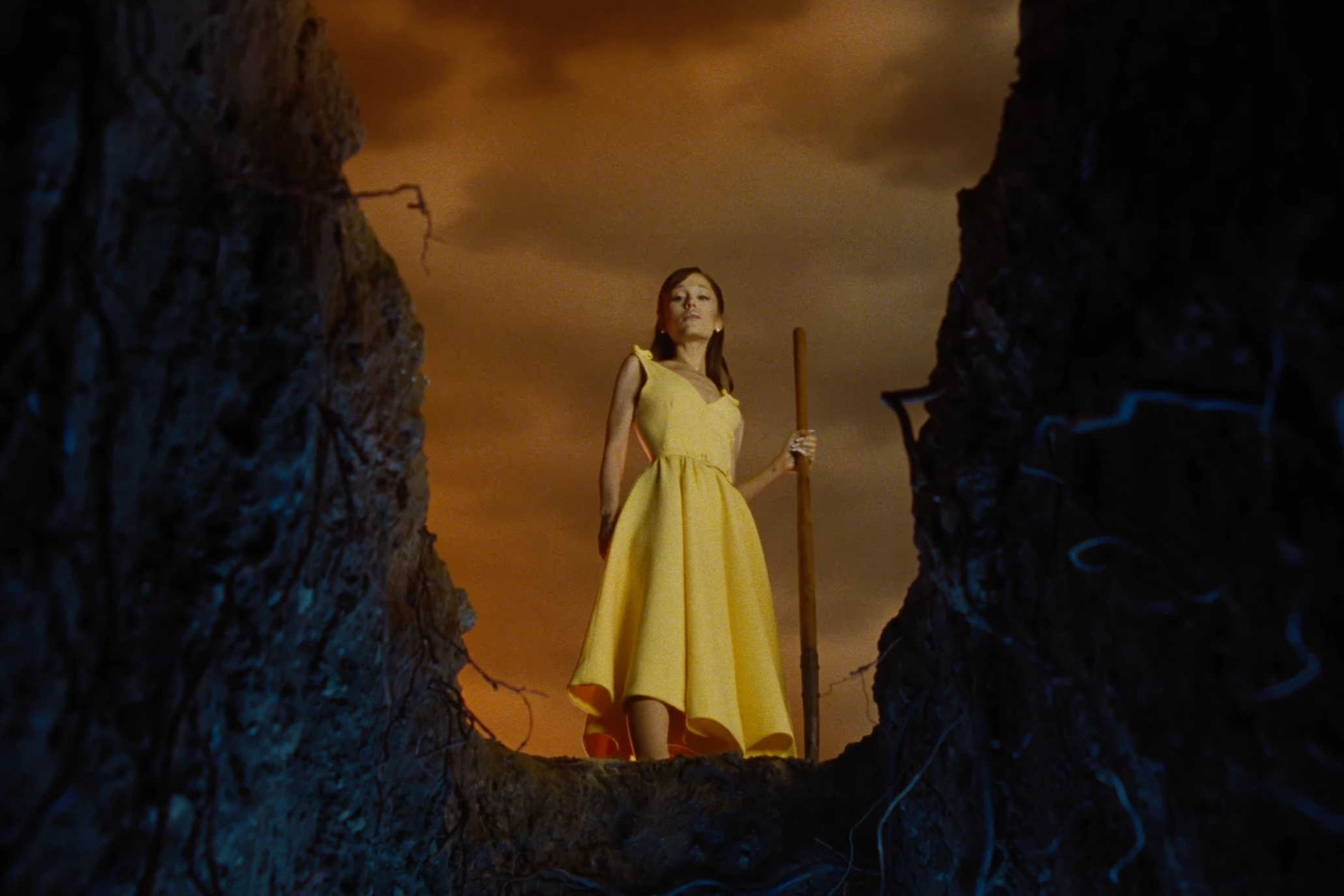
Ariana Grande in the hate that i made you love me music video
I have followed Ariana Grande long enough to have seen her art direction develop, from the teeny-bopper days of Yours Truly through Dangerous Woman, and then the Sweetener era, the first album that honored her own creative vision. When Grande announced petal in the middle of a sold-out tour, the pace took me aback. What I looked forward to most was seeing where the visual language went next. Eternal Sunshine and Brighter Days Ahead showed a more mature, involved version of Grande's artistry, so I knew the art direction for this next album would be intentional, at the very least.
The album artwork for petal landed and I immediately noticed the lack of color. Grande is largely hidden from us, with her hair falling across her face. My first read was that the desaturation and the choice of photo were curious rather than deliberate. Then hate that i made you love me arrived, and Grande has since been posting fragments of the record, shaping the era's aesthetic.

It was not until I was in the crowd at the Eternal Sunshine Tour, watching the interludes and seeing how she sang hampstead with so much vitriol toward her critics, that the art direction clicked for me. Her aesthetics have largely been inspired by films, from the thank u, next music video to Eternal Sunshine. What struck me the most about the hate that i made you love me visuals, though, was how the warmth of Eternal Sunshine had been replaced by nods to horror films like Jeepers Creepers. Through the petal art direction, Ariana is making a horror movie depicting her own audience as the monster. The campaign runs on a split between the people who see a person and the people who see a product. One group made these images. The other is in them, depicted as monsters.
The video for hate that i made you love me operates on the same inversion we see on the petal album cover. Justin Long stands in a bunker, filling a grave. The camera pans down, and we see an underground room where the walls are stacked floor to ceiling with black and white composition notebooks, each one labeled with one of Grande's insecurities. He packs the dirt down, climbs out, drives away, looks into the mirror, and sees Grande in the back seat. She spends the rest of the video haunting the man who buried her.
The Credits Give It Away
A closer look into the music video's call sheet gives away the logic of the aesthetic. Justin Long has spent two decades as a face of American horror, having starred in films such as Jeepers Creepers, Barbarian, and Drag Me to Hell. Casting him is a deliberate signal to the genre. The video's title card uses the same thick, brushy, hand-painted lettering style common to 1960s horror posters.
The video is directed by Christian Breslauer, the same person who made the Brighter Days Ahead short film, which means this creative team is continuing a story it began telling years ago. The cinematographer is Janusz Kaminski, who shot Schindler's List and Saving Private Ryan and won Academy Awards for both, working here on 35mm film.
A pop star of Ariana Grande's caliber does not hire Kaminski for mere aesthetics. Grande hired him because she wanted her vision to be taken seriously. In essence, the music video serves as a film about what it is like to be her.
✱
THE REFERENCES

Hate that i made you love me · 2026

DR. TERROR’S HOUSE OF HORRORS · 1965

psycho · 1960

curse of the werewolf · 1961
✲ ✲ ✲
Access Denied
Everyone calls the petal cover black and white, but a closer look at the image reveals it is a negative, an inversion. Her face is turned, her hair falling across it. Her eyes are shut and she is smiling. The ponytail, a silhouette so established it functions as a logo, is gone. We are looking directly at Ariana Grande, but we cannot fully see her. After three years of being photographed against her will and dissected frame by frame, an image where she is partly hidden reads as a decision about the gaze. Ariana Grande is telling you exactly how much access you get to her, and whatever access you get is given to you on her terms.
Draining the Palette
This is Grande's first black and white album cover since 2016's Dangerous Woman, reissues aside. Since Sweetener, color has carried Grande's narrative as much as the music has. The fleshy peach of Sweetener, for instance, gave the album cover the vulnerability and intimacy of skin. The moodier graphic palette of thank u, next matched its darker subjects. Ariana Grande speaks in color, so draining it out completely reads as a bold choice for her. Without any colors to gawk at, the images read as memory, which puts distance between Grande and the viewer.
✱
THE visuals (source: @arianagrande on instagram)

Photography by katia temkin

Photography by katia temkin

Photography by katia temkin

Photography by katia temkin
A Soft Title for a Hard Record
In a clip Grande posted of oh well, she sings about trading dysfunctional relationships for good ones and dismissing someone with a shrug rather than a scream, closing the thought by sending them off to hell without raising her voice.
In an Instagram post, Grande has described the album as growing through the cracks of "something cold and hard and challenging." The contrast between the tender identity and the cold, hard material underneath is the thesis of the album, and it lives in micro decisions that trust the viewer to connect them. Nothing here is on the nose, and it is that very restraint that makes for such a sophisticated product.
The Unlikely Monster
On the surface, hate that i made you love me plays like a breakup video, with Justin Long cast as the ex. Grande has been alluding to something more nuanced, on the record, for two years. In September 2024, hooked to a lie detector for Vanity Fair, Grande was asked by her Wicked co-star, Cynthia Erivo, whether she loves her fans. She responded saying she "loves them, always." The machine confirmed she was telling the truth. In the same conversation, she called the relationship "weirdly parasocial" and "real at the same time." That same year, she said publicly that people sending hate to people close to her were "not supporting her."
Ariana has consistently been telling us who the monster is. In the hate that i made you love me music video, the girl in the bunker is the version of Ariana Grande the audience built and still demands: boxed in notebooks, labeled with every insecurity the public was happy to hand to her, buried and refusing to stay down. The public spent three years picking apart her body, her face, her private life, essentially making her the face of all of culture's discourse around body image and the use of Ozempic within the industry. It's with this that the resentment she's had starts to become more apparent through the motifs and the music video.
The emotions run deep for Ariana. Search for clips of the Sweetener Tour on TikTok and you will find compilations of Grande in 2019, mid-song, breaking down in tears on stage, processing trauma in front of twenty thousand people. I tried to rewatch clips of that tour recently, but I found them difficult to watch. Having seen the Eternal Sunshine Tour this year, I was grateful for where she has arrived. Ariana has a complicated relationship with her pop star life and her audience, and the tour makes it clear she has grown through it. She is making decisions now with a clear, deliberate intention that I find fascinating.
And here is my prediction before this album drops. If I had to guess, I'd bet petal will be about being watched and monitored more than it will be about breakups. Hell, the lyrics of hate that i made you love me hold up if you read them as being about toxic fans and the general public. And this wouldn't be the first time she addressed that in her music. We can't be friends is largely believed to be about her fans and the public.
Shot from Inside the House
Here is the small detail most coverage of the album is missing: the cover was shot by Katia Temkin. If you do not know her name, you probably know her work. She is an NYU-trained photographer and director who runs her own studio and shoots for artists including Christina Aguilera and Zara Larsson.
Temkin has been on Grande's creative team since 2018, starting with the thank u, next lyric videos. She became the main photographer for R.E.M. Beauty and shot the Eternal Sunshine covers. It appears that she, through the course of working with Grande over the years, developed a bond with her, which all the more makes for compelling material.
This is where more record labels could take note. The chemistry between an artist and their creative team is more integral to the production than I think people realize. Yet the industry often treats photographers as interchangeable names on a call sheet. The marketing teams at labels should hire people who understand the artist's instincts, image, and visual language. Then the work is far more likely to feel authentic, and that authenticity is what makes an audience believe in the world the campaign is selling.
Notice the distinction between the people Ariana trusts to shape her image and the people she criticizes through it. Temkin makes the work she makes because she is photographing Ariana the person. The Ariana in the bunker belongs to the people who only ever wanted the product. One end of that relationship produces the art, the other produces the monster.
The antagonists in this narrative are the people whose appetite is for the product rather than the person. Throughout the rollout, Grande has responded by placing her image in the hands of collaborators who are interested in seeing her as a human being first. The tension between the two groups sits at the center of the story being told.
Friday
Petal arrives Friday, July 31. If this is a breakup record, I'm sure Grande made a beautiful one. But I do not think that is what it is. I believe what we get will be something more enraged than what we're used to seeing from Ariana Grande.
Either way, the success of the rollout is best encapsulated by one moment in the hate that i made you love me video. The grave is filled in, the car pulls away. Justin Long sits at the wheel frazzled and paranoid, while she rides in the back seat, silently, slyly, smiling to herself, in full control of a frame he thinks he is driving.